
World Elephant Day: What Different Elephant Populations Teach Us About Coexistence
Tomorrow, Wednesday 12th August is World Elephant Day, a moment to celebrate one of Earth's most remarkable species, while recognising the challenges elephants continue to face across Africa.
Tanzania remains one of the continent's most important strongholds for African savanna elephants. The recently released 2024/2025 National Wildlife Census recorded approximately 66,700 elephants, highlighting both the significance of Tanzania's remaining populations and the need to protect the landscapes that sustain them. While elephant numbers have recovered from the lows recorded after the ivory poaching crisis of the early 2000s, habitat fragmentation, expanding human populations and conflict with farmers continue to threaten their future.
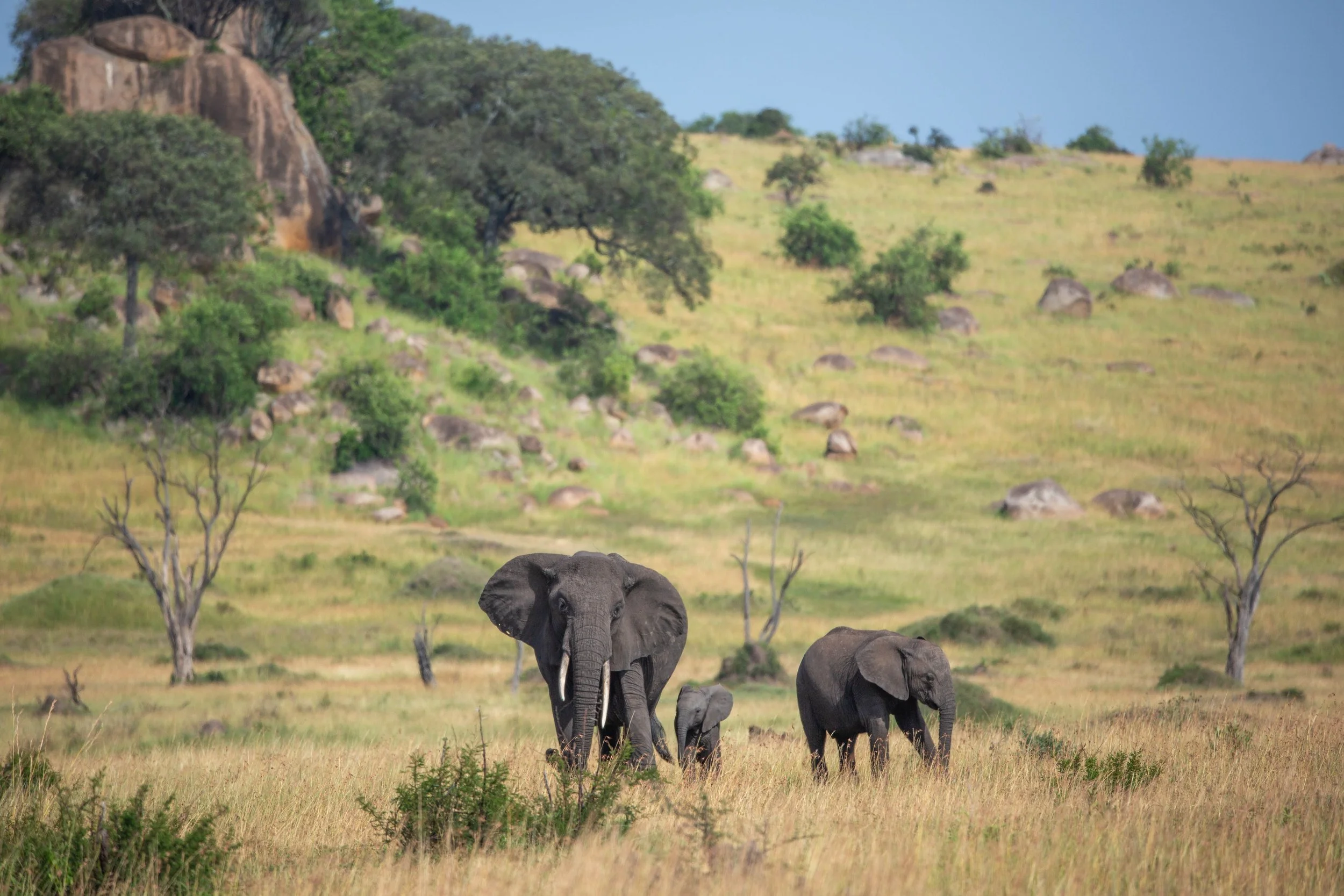
A mother elephant guides her young calf and infant across the northern landscape of the Serengeti. Copyright Francesca Mahoney, Wild Survivors.
At Wild Survivors Tanzania, we've learnt that successful coexistence begins with understanding elephants; not simply where they are, but how they behave, how they learn, and how they adapt to living alongside people.
Over the past few years, our network of community-managed beehive fences has expanded across three very different ecosystems: the Ngorongoro Highlands, the North-West Serengeti and the vast Rukwa–Katavi landscape. Together, these projects are helping us build an increasingly comprehensive picture of elephant movement and behaviour across Tanzania's connected landscapes.
Perhaps the most fascinating lesson is that no two elephant populations behave in quite the same way. Their decisions are shaped by a combination of landscape, resource availability, social learning, past experiences with people, and the knowledge passed between generations. As our monitoring network grows, we're beginning to see distinct behavioural patterns emerge across Tanzania's ecosystems where we work alongside our community partners, providing valuable insights into how coexistence strategies can be adapted to different landscapes and elephant populations.
In Ngorongoro, elephants have become remarkably familiar with the community-managed beehive fences protecting farms along the forest edge. Three well-known bulls regularly patrol the forest firebreak separating the highland forest from community farmland, but now rarely attempt to cross into cultivated areas. It is a remarkable change from the large matriarchal herds that once emerged from the corridor to eat crops planted along the corridor edges. Today, many elephants appear to recognise the beehive fences as a boundary, following their forested routes that allow them to continue moving through the landscape while avoiding the risk posed by active bee colonies.
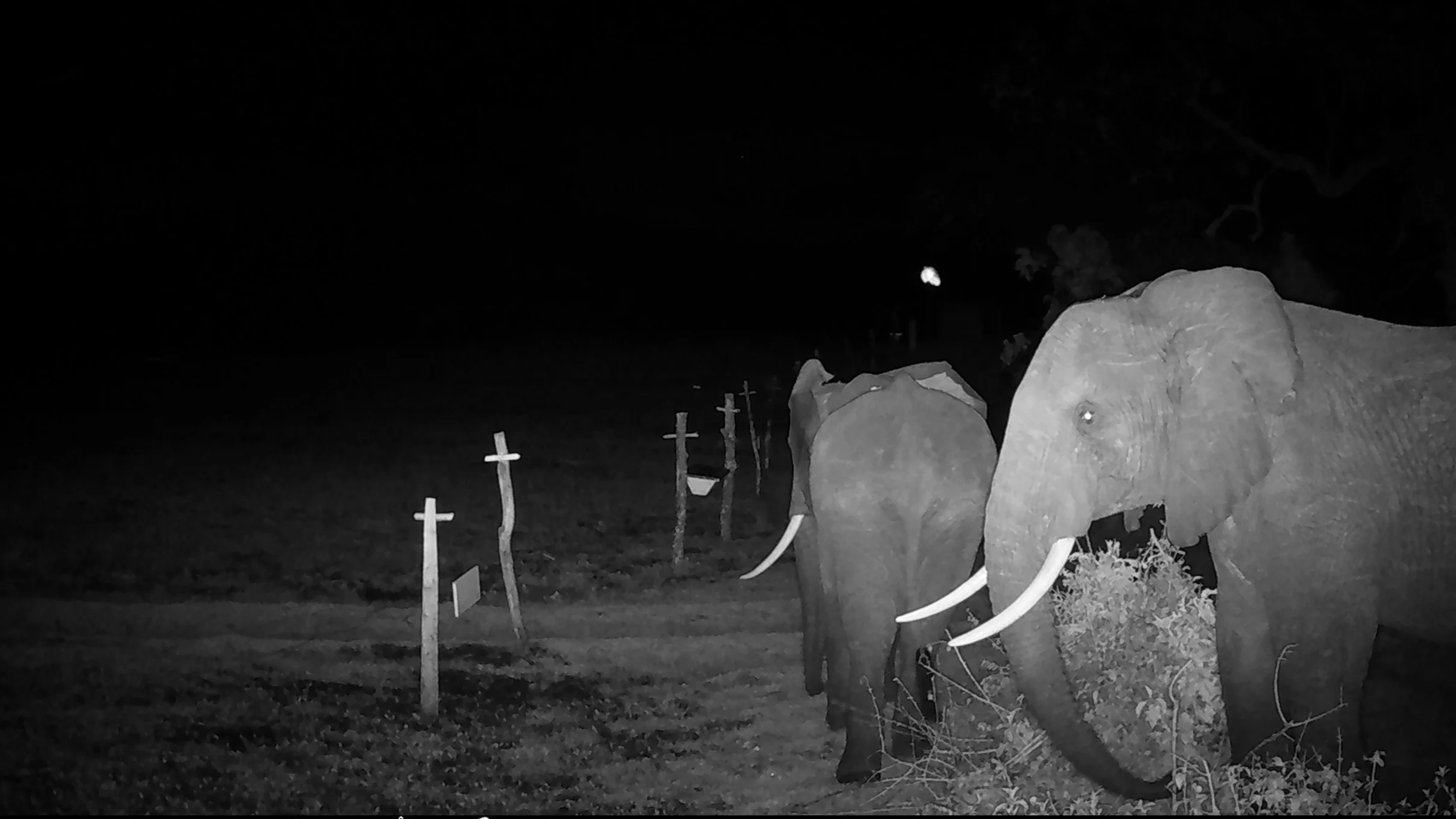
Two elephant bulls patrol the length of the Upper Kitete beehive fence, checking for empty hives where they might attempt to access to crops, before continuing on their way to the Highlands Forest. Copyright Wild Survivors.
Along the Serengeti border, the story is different. Here, elephants often show greater caution and more reactive behaviour around people and farms. Long-term exposure to higher poaching pressure and repeated negative encounters with humans are likely to have influenced how these populations perceive risk. Farmers work tirelessly to maintain healthy bee colonies along the fences, while more than 90 women beekeepers are transforming honey and beeswax into natural soaps, body creams and medicinal honey through their new Enterprise Hub. Every thriving beehive strengthens both community livelihoods and the effectiveness of the fence.
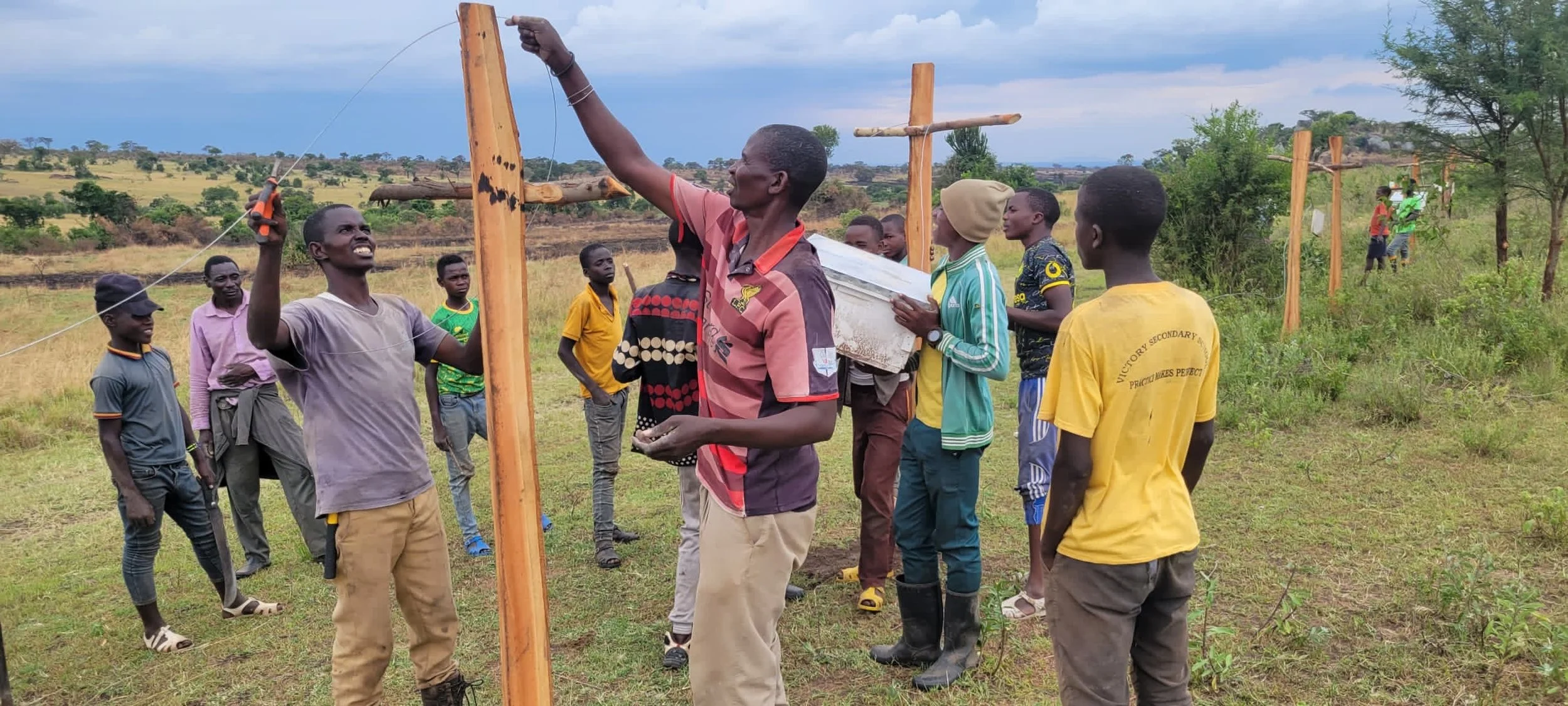
Serengeti farmers in Mbilkili Village install a new section of their beehive fence supported by Wild Survivors Tanzania & Nomad Trust. Copyright Masalu John Masaka, Wild Survivors.
Across the vast Rukwa–Katavi Ecosystem, elephants move through one of Tanzania's largest connected landscapes of miombo woodland, protected areas and wildlife corridors. They are often encountered calmly feeding or travelling through farmland during daylight as they move between key habitats. Trained Elephant Champions respond using community-led rapid response toolkits, including vuvuzelas, torches and coordinated monitoring, to gently encourage elephants back towards protected areas before conflict escalates. Alongside this, community-managed beehive fences and women's enterprise groups are creating practical incentives for coexistence while strengthening local livelihoods.
These differences are shaping how we design our coexistence programmes. Rather than applying the same approach everywhere, we're adapting our work to each landscape. In Ngorongoro, maintaining healthy bee colonies and well-managed beehive fences helps reinforce behaviours elephants have gradually adopted over time. Along the Serengeti border, strengthening community ownership, enterprise development, stakeholder collaboration, and fence effectiveness remains essential where elephants continue testing boundaries. In Rukwa–Katavi, protecting dispersal areas, supporting rapid response teams and maintaining habitat connectivity play an equally important role in helping elephants move safely through the landscape.
By combining long-term ecological monitoring with generations of local community knowledge, we're continually refining our approach, ensuring coexistence strategies are informed not only by where elephants live, but by how they respond to the people and landscapes around them
Our growing understanding remind us that coexistence cannot rely on a single solution. Every landscape is different, every community experiences elephants differently, and every elephant population responds in its own way. The more we understand how different elephant populations respond to people, landscapes and coexistence interventions, the better we can collectively design locally appropriate solutions that work for both communities and wildlife.
By working alongside communities in priority conflict hotspots and critical dispersal areas, we're helping safeguard the connections between Tanzania's ecosystems while reducing the risks faced by both people and elephants. These landscapes provide vital connections between protected areas, allowing elephants to continue seasonal movements that maintain healthy, resilient populations. In turn, elephants continue to shape these ecosystems by dispersing seeds, opening vegetation and creating habitats that benefit countless other species. Supporting coexistence is therefore not simply about reducing conflict, it's about safeguarding the ecological processes that keep entire landscapes connected and functioning, while helping the communities who share these landscapes build safer and more resilient futures.
This World Elephant Day, we celebrate not only elephants, but also the communities living alongside them every day, whose knowledge, resilience and stewardship are helping shape a future where people and wildlife can thrive together.

WST’s Esther Joseph meets with farmers and our Elephant Conservation Ambassador in new partner village of Kabunde, bordering Rukwa Game Reserve, as the group maps elephant movement through farms, in this crucial dispersal range connecting Rukwa to Mpwimbe WMA. Copyright Wild Survivors.